The city where the dollar was born
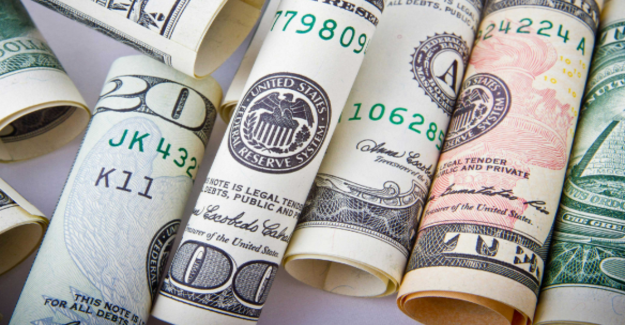
If you have money, you can also get tiger milk. And if you have US dollars? Just remember, today’s US dollar is the most widely used currency in the world. 58 percent of the world’s total foreign exchange reserves are held in dollars. 31 countries use the dollar as their official currency or have named their currencies after the dollar. 65 countries have linked their currencies to the dollar. From North Korea to Siberia, and even to research stations at the North Pole, the dollar is accepted everywhere.
But the surprising thing is that the US dollar, which has become so dominant, was born in another country. In 1520, that currency called ‘thaler’ was created in the small town of Jáchymov in the Czech Republic. Over time, the thaler became the dollar. Another interesting fact is that the dollar is no longer used in the town of Jáchymov.
The birthplace of the dollar, but the dollar is banned
The town of Jáchymov, with a population of only 2,300 people near the Czech-German border, is still quite quiet. Old Renaissance buildings, Gothic-style houses, some spas and a small castle lined up along a street. At first glance, no one would guess that this is the birthplace of the dollar.
How the Thaler was born
In 1516, silver was found in this mountainous area. Count Hieronymus Schlick, a wealthy and influential local man, named the area Joachimsthal. This is where the name Thaler came from. At that time, each state in Europe minted its own currency. Schlick obtained permission in 1520 and minted his own silver coin. The front had a picture of Joachim, and the back had the Lion of Bohemia.
Schlick did two smart things—
He kept the weight and size of the coin the same as the Guldengrosschen used throughout Europe.
He increased its production to a huge extent, which had never been done before.
In just 10 years, a small village of 1,500 people turned into a bustling city of 18,000 people. 8,000 miners worked day and night in 1,000 mines to extract silver. By 1560, the area had become a major source of silver for Europe. By the 16th century, about 12 million thalers had been minted across Europe.
From thaler to dollar
In 1566, the thaler had become so popular that the Roman Empire adopted the thaler as its monetary standard. Over the next 300 years, various versions of the thaler were used in Europe, Africa, the Arabian Gulf, India, Scandinavia, etc.
The name of the thaler changed from country to country. For example:
In Denmark, Norway, and Sweden, it is the daler.
In Iceland, it is the dalur.
In Italy, it is the talera.
In Poland, it is the taler.
In Hungary, it is the taler.
In France, it is the zokandale.
In Slovenia, it was known as the tolar until 2007.
Even the names of the currencies of Romania, Bulgaria, and Moldova are derived from the lion symbol of the thaler.
However, the American dollar came from the Dutch Lion Dollar. After the Dutch arrived in New Amsterdam, or present-day New York, in the 17th century, the currency spread to the British colonies. In 1792, the United States officially named their currency the dollar.
The dark history of the birthplace of the dollar
When silver ran out, a mysterious black mineral called uraninite began to be found in the mines of the town of Yakimovo. Many workers died of lung disease after coming into contact with this mineral. In 1898, researcher Marie Curie discovered radium and polonium from this mineral. The skin on her hands was damaged, she later received the Nobel Prize and finally died of radiation sickness.
Yakimovo is a city where the world’s most influential currency was born. But that currency is no longer accepted there. The journey of the thaler began with the abundance of silver, which later became the dollar and became the center of the world economy. This small mountain town once set the value of Europe’s most important currency. Later, it became a center of research, disaster, and Soviet-era political repression due to its uranium and radium.
Today, Yakhimov is slowly healing the wounds of its past. The old mines have closed, the dilapidated buildings are being rebuilt, and the royal mint house, where the plates were made, is now a museum of history.