Desk Report:
The leaders who received the rice ear
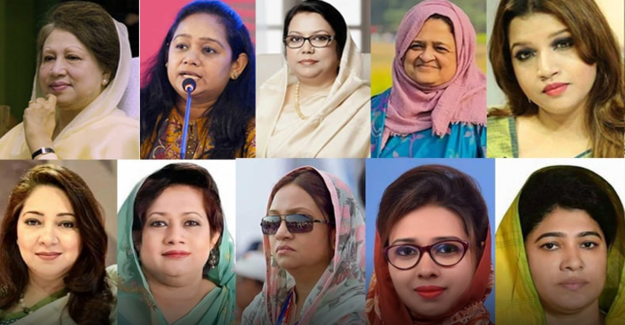
In line with the July charter recommendations, the BNP is fielding 5 percent women candidates out of 300 seats in the 13th National Parliament elections. Of the 237 seats that party Secretary General Mirza Fakhrul Islam Alamgir released on Monday, 12 seats have 10 women’s names. Of these, only three seats have been announced for Begum Khaleda Zia, including Dinajpur-3, Bogra-7 and Feni-1. According to bdnews24.
According to Bangladeshi law, a candidate can contest a maximum of five seats. Khaleda Zia has contested from five seats at different times; she has never lost. Khaleda Zia’s ancestral home is in Feni. And her husband, BNP founder and former President Ziaur Rahman, has his ancestral home in Bogra. Although Khaleda Zia was born, raised and educated in Dinajpur city, she has never contested from here before.
Apart from this, the names of other female leaders who have been announced are-
Sanjida Islam Tuli (Dhaka-14): She is the coordinator of ‘Mayer Dak’, a protest platform for families of missing persons. On December 2, 2013, Sajedul Islam Nayan, the then general secretary of Ward 38 BNP in Dhaka, was taken away from Bashundhara residential area by RAB. At that time, the organization named ‘Mayer Dak’ was formed at the initiative of Sumon’s mother Hazera Khatun and her family.
Afroza Khanam Rita (Manikganj-3): Convener of Manikganj district BNP and chairwoman of Munnu, one of the country’s industrial groups. Rita’s father, Harunar Rashid Khan Munnu, founded this industrial group and served as a minister in the BNP-Jamaat government.
Tahsina Rushdir Luna (Sylhet-2): Wife of Ilias Ali, a former MP from this constituency. Ilias was abducted in 2012 during the Awami League government; his wife Luna has been active in politics since then.
Shama Obaid (Faridpur-2): He is the party’s organizing secretary. His father, the late KM Obaidur Rahman, was the BNP’s secretary general (1986–88); he has served as a minister in several ministries.
Chowdhury Nayab Yusuf (Faridpur-3): Joint general secretary of the Bangladesh Nationalist Women’s Party and former convener of the Dhaka Metropolitan North Women’s Party. His father, the late Chowdhury Kamal Ibne Yusuf, was the BNP’s vice chairman and a minister several times. Nayab’s grandfather, Yusuf Ali Chowdhury, was a Muslim League leader and his great-grandfather, Chowdhury Moizuddin Biswas, was a landowner.
Israt Sultana Elen Bhutto (Jhalakati-2): After the assassination of MP Zulfikar Ali Bhutto, his wife Elen became an MP in 2000. She then won again in the 2001 elections, defeating Awami League leader Amir Hossain Amu.
Farzana Sharmin Putul (Nator-1): She is serving as the special assistant of the party’s Foreign Affairs Advisory Committee and a member of the media cell. This High Court lawyer was a member of the Interim Government’s Anti-Corruption Commission Reform Commission. Her father, the late Fazlur Rahman Patol, was a four-time MP nominated by BNP.
Sansila Zebrin Priyanka (Sherpur-1): She is the daughter of Hazrat Ali, the district BNP general secretary. Priyanka was the youngest candidate of BNP in the 11th National Parliament elections.
Sabira Sultana Munni (Jashore-2): Jhikargacha Upazila BNP president and central BNP member, was the chairman of the local Upazila Parishad. Munni’s husband Nazmul Islam was once Jhikargacha Upazila BNP president and Jessore District BNP finance secretary. Nazmul’s body was found in Gazipur after being kidnapped in Dhaka in 2011.
The leaders who received the rice ear
BNP last participated in the 2018 elections. In that, 14 women leaders fought for the paddy sheaf. The July charter calls for nominating 5 percent women candidates out of 300 seats. 27 political parties and alliances, including BNP, have approved this proposal. And three parties and alliances have given notes of dissent.
According to the Representation of the People Order, political parties are required to have 33 percent women members in all committees. This goal was supposed to be achieved by 2020. However, since it was not possible, the time has been extended to 2030.
According to the election results of the National Parliament, 5 out of 39 female candidates were elected in the 1991 parliamentary election. 8 out of 36 female candidates in the 1996 election, 6 out of 38 female candidates in the 2001 election, 19 out of 59 female candidates in the 2008 election, and 18 out of 29 female candidates in the 2014 election became MPs through direct vote. In the 11th parliamentary election held in 2018, 22 out of 69 female candidates were elected through direct vote. And in the 12th parliamentary election in 2024, 19 out of 94 female candidates were elected MPs.